Harvard University
2021 Doctor of Design (Phd equivalent)
Thesis: Spatial Opportunities for Self-Produced Environments
Universidad Metropolitana
2003 Master of Science in Urban Design (MAUD)
Summa Cum-Laude & Ranked best GPA in the College
Universidad Simón Bolívar
1998 Licensed Architecture (MArch)
Accreditation License No. CIV:118.809
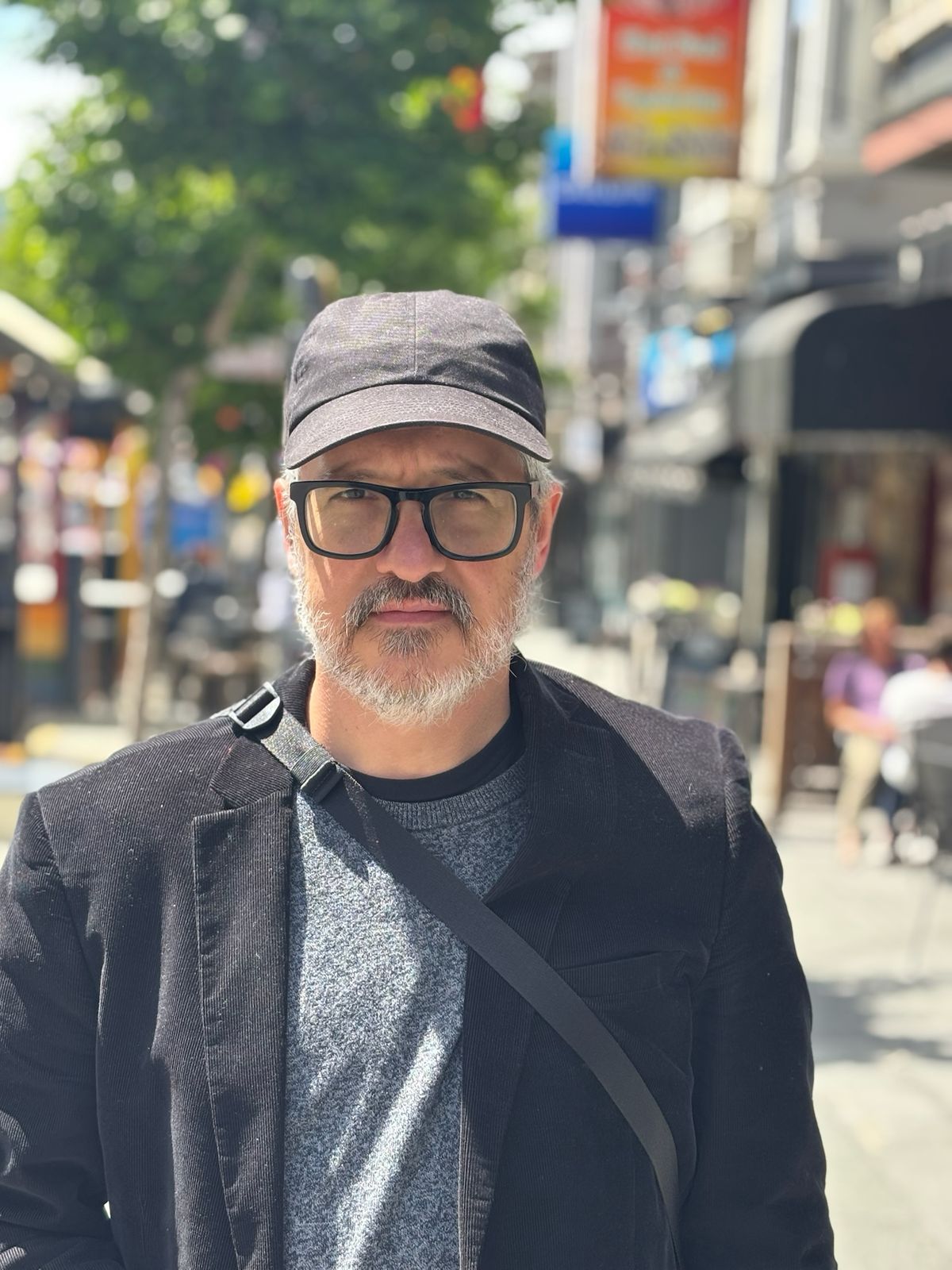
About Ignacio A Cardona
Architect, Urban Designer, Researcher, and Educator | Associate Professor, Wentworth Institute of Technology | Director, Spatial Opportunity Lab
I am an architect and urban designer, Associate Professor at Wentworth Institute of Technology, and Doctor of Design from the Harvard Graduate School of Design. My work examines how urban design can address spatial inequality and ecological transformation through the articulation of communities, institutions, infrastructures, and living systems. Working across architectural, urban, and territorial scales, my research brings together political ecology, participatory planning, spatial analysis, and design.
Central to my work is Spatial Opportunity, a framework originating in my doctoral research on self-produced environments. Rather than approaching underserved territories primarily through their deficits, Spatial Opportunity identifies relationships, resources, spatial conditions, and local knowledge through which transformation can emerge. My current research extends this thinking through Ecosystemic Democracy and Restorative Community Design, exploring how design can expand participation, strengthen community agency, and restore relationships among people, places, and ecological systems.
I understand urban design not only as the production of spatial form, but also as a mode of inquiry and a means of producing knowledge. My work combines participatory planning and mapping with spatial analysis and emerging technologies—including GIS, artificial intelligence, digital fabrication, and interactive platforms—to translate different forms of knowledge into design possibilities. Projects such as TapiriTech, The Listening Deck, and PATH explore design artifacts as instruments for research, representation, collective learning, and decision-making.
Teaching: I have taught architecture and urban design for more than eighteen years, including appointments at the Harvard Graduate School of Design, Universidad Simón Bolívar, and Wentworth Institute of Technology. Before migrating from Venezuela, I was a tenured professor at Universidad Simón Bolívar. At Wentworth, I teach urban design studios, research methods, decolonization approaches to urbanism, and Restorative Community Design. I approach students as active agents in the production of knowledge, connecting design research, representation, community engagement, and emerging technologies.
Practice: My scholarship is grounded in extensive design practice. I founded AREPA: Architecture, Ecology, and Participation, where architectural and urban projects in Latin America connected design experimentation with community participation and civic transformation. AREPA evolved into the Spatial Opportunity Lab (SOLAB), creating a bridge between research and practice and extending this work from architectural interventions and public spaces to neighborhoods, cities, and regional territories.
Research: My research advances Spatial Opportunity through political ecology, Ecosystemic Democracy, and Restorative Community Design, investigating how urban and territorial design can articulate social and ecological systems and expand participation in spatial decision-making. Ecosystemic Democracy extends participation beyond human communities by recognizing ecological systems and non-human actors as integral to collective decision-making, while emerging technologies—including GIS, projection mapping, and artificial intelligence—provide new tools for spatial analysis and negotiation. In Uruguay, I coordinate the spatial framework for Proyecto Carapé, where political ecology and land suitability analysis are used to blur conventional boundaries between ecological conservation and economic development.
2026
2025
2024
2023
2022
2021
2020
2019
2018
2017
2016
2015
2014
2013
2012
2011
2010
2009
2008
2007
2006
2005
2004
2003
2001
2000
1999
1998
1997
1996
1995
Media Archive
Experts Workshop | Participatory Planning and Ecosystemic Democracy in Proyecto Carapé
Video documenting the Experts Workshop for the Territorial Planning Framework of Gran Parque Carapé, held in Punta del Este, Uruguay, on September 18, 2025. The workshop brought together 63 participants—including 53 experts from public institutions, universities, civil society organizations, local communities, and diverse professional fields—to collectively explore the ecological, productive, social, and territorial systems shaping […]
TapiriTech N’dakinna: Indigenous Stewardship in Campus Planning
Video documenting TapiriTech in the Fall 2025, an interactive participatory design tool combining a physical model, digital projection, and real-time drawing to support collaborative spatial exploration in N’dakinna (Durham, New Hampshire). Developed in collaboration with Wentworth Institute of Technology, Perkins&Will, and the Indigenous New Hampshire Collaborative Collective. Students: Damien Josephson, Giovanny Delina, and Jamie Tam. […]