Teaching
Ecological Fluxes: Architecture and Connectivity in the Galápagos
2006
Faculty:
Ignacio Cardona, Tomás Cervilla, Instructors; María M. Hernández, Landscape Instructor
Students:
23 Architecture Students
Institutions:
Universidad Simón Bolívar
*
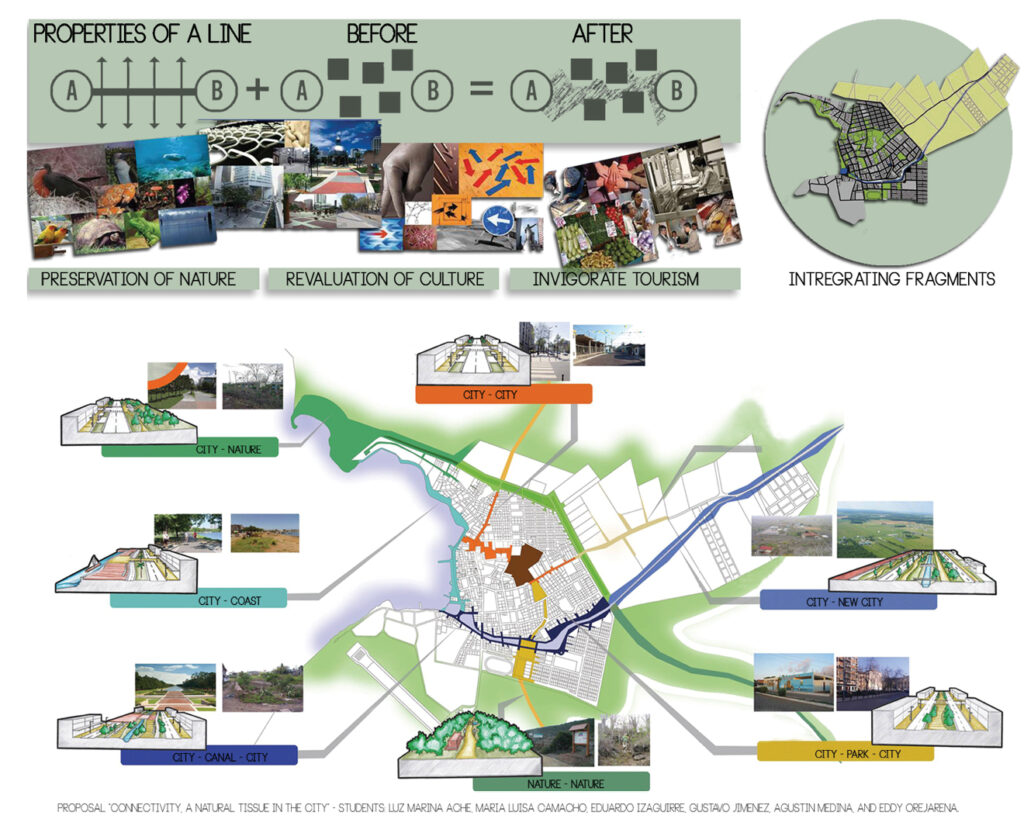
Developed in response to a competition launched by the XV Pan-American Architecture Biennale of Quito, this architecture studio investigated how urban development could reduce its impact on the fragile ecosystems of the Galápagos Islands. The studio expanded the notion of ecology beyond the separation between human activity and nature, understanding settlements, energy, waste, mobility, and living systems as interconnected components of a shared ecological system.
Students mapped the flows produced by human and more-than-human activities across the territory—from visitors moving between accommodations and natural attractions, to public transportation serving residents, to the movement of birds across habitats. These flows were interpreted as spatial corridors through which architecture, landscape, mobility, and ecological systems intersect. Their analysis became the basis for design strategies exploring sustainable connectivity between urban settlements and the island’s fragile environments.